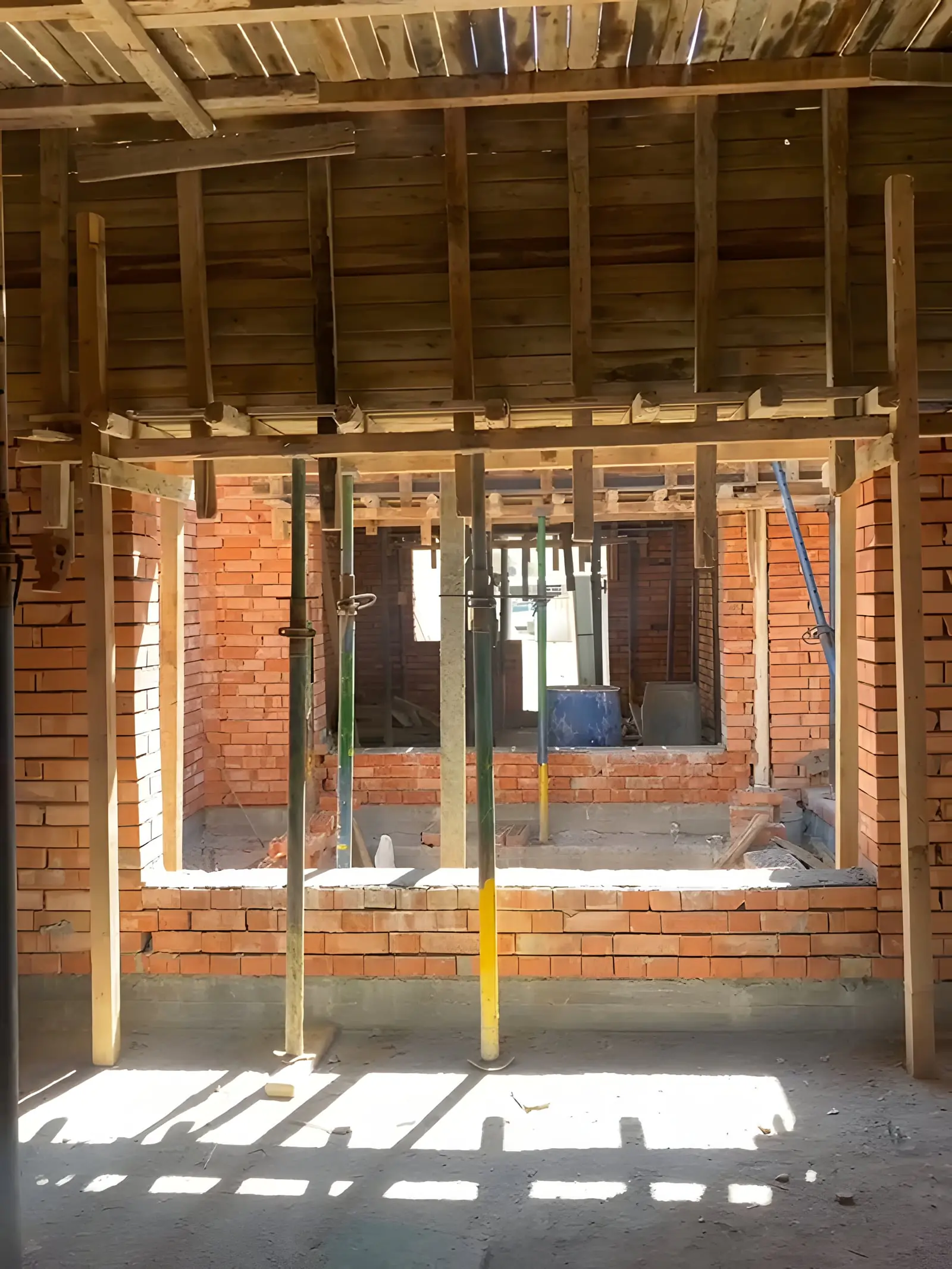
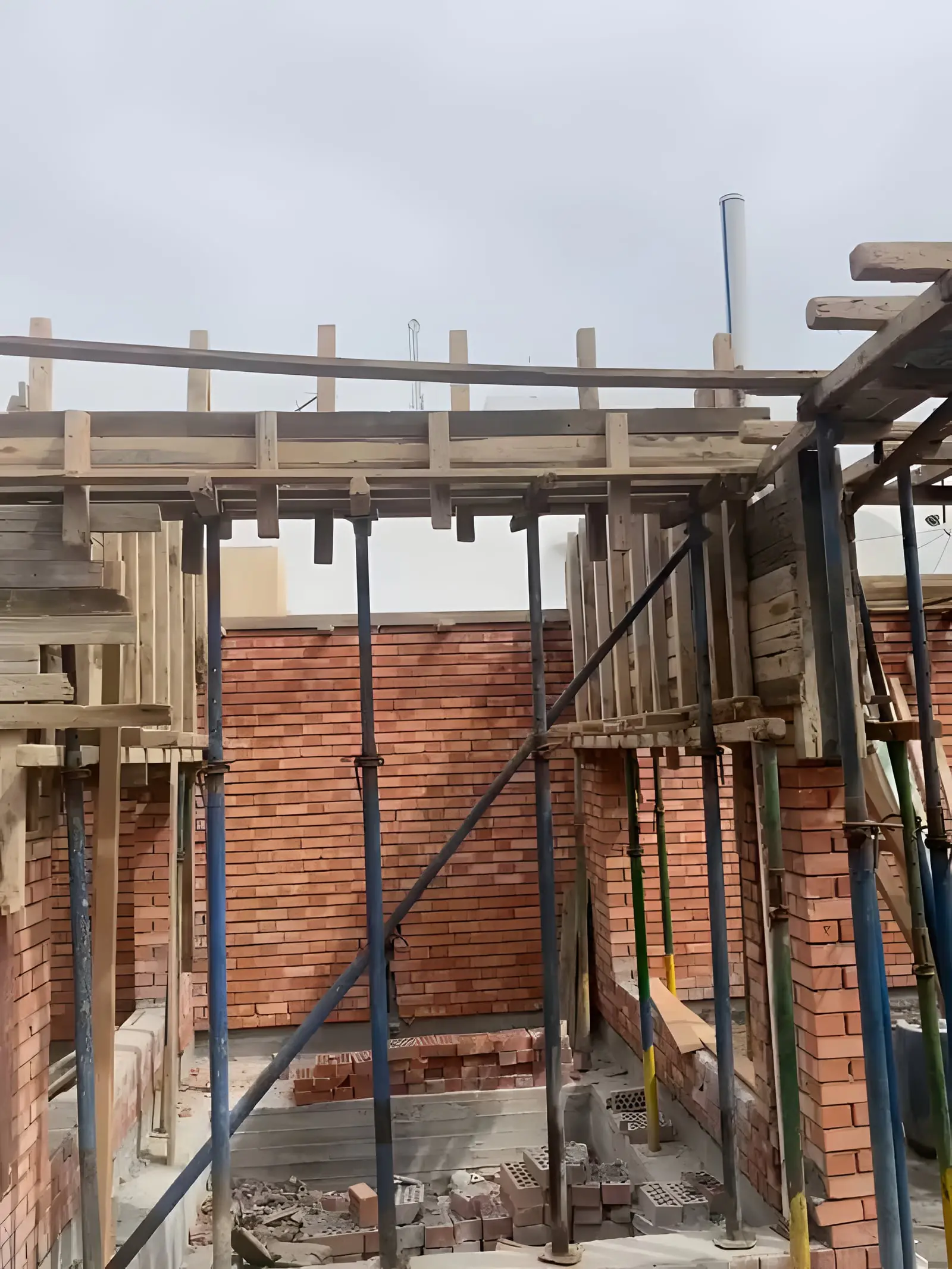
When a landowner asks what building will cost, they expect a single rate per square metre. That single figure does exist, but it is an output rather than an input: it emerges from a set of known line items that anyone can learn to read. Whoever understands the items can compare two offers and tell which is genuinely cheaper and which is only cheaper on paper.
Cost is not a number but five layers
Any construction project consists of five cost layers, each priced separately: earthworks and foundations; the structural frame; architectural works and envelope; mechanical and electrical systems; and finishes.
The first three are relatively stable because their specification is engineered: concrete to a given strength, reinforcement at a calculated diameter and spacing. The last two are where variance concentrates — and they are precisely what separates one offer from another.
Why two offers can differ by half
In most cases the reason is neither greed nor generosity but a different assumed specification. One contractor assumed a standard aluminium window; another assumed a thermally broken system with double glazing. Same square metre, entirely different specification.
Hence the first rule of comparison: do not compare two figures before comparing the two specifications behind them. Ask each bidder for a specification schedule, then compare item by item. Only then does the difference in price mean anything.
The items that get forgotten and resurface as “extras”
These are the most common source of friction between owner and contractor, and all of them are foreseeable:
External services — connecting water, drainage and electricity to the public networks, sometimes requiring excavation beyond the plot. External works — boundary wall, gate, landscaping and paving. Temporary facilities — site power, water and hoarding. Official fees and approvals. And finally a contingency, reasonably between 5% and 10% of project cost.
An offer that omits these is not cheaper — it is incomplete. The difference will appear regardless, only after signature.
Where the contracting fee sits
Our construction fee runs between 12% and 15% of the works cost. It covers project management, engineering supervision, coordination across disciplines, quality and programme control, and accountability for the result.
Removing it can look like a saving. In practice management is not removed but transferred: it becomes the owner’s job, and owners are rarely free or qualified to do it. The cost of one wrong decision at frame stage exceeds the entire management fee several times over.
How to build the budget in practice
Start from total built area, not plot area. Multiply it by a rate range appropriate to the finish level you want — a contractor will give you that range in the first meeting. Add external works and services, then add a contingency of 5% to 10%.
The result is a preliminary budget sound enough to decide on: do we proceed at this size, or adjust area or specification? The precise figure comes later from a bill of quantities built on completed drawings — not before.
Three notes specific to the Iraqi market
Material prices move, and some track imports and the exchange rate. Prices are therefore normally held for a defined period, with the contract stating what happens if the project runs past it.
Payment follows progress, not the calendar. An interim certificate is paid against work completed and measured, which protects both parties.
Finally: a completed design, coordinated across disciplines, is the cheapest cost-control instrument that exists. A change on paper costs hours; the same change after the pour costs weeks and real money.
Frequently asked
Can building cost be known before design?
An indicative range can, based on built area and finish level, and it is enough to decide whether to proceed. A precise figure requires completed drawings and a bill of quantities.
What does the 12%–15% cover?
Project management, engineering supervision, coordination across disciplines, quality and programme control, and accountability for the final result.
What is a reasonable contingency?
Between 5% and 10% of project cost, rising the less complete the design is when construction starts.